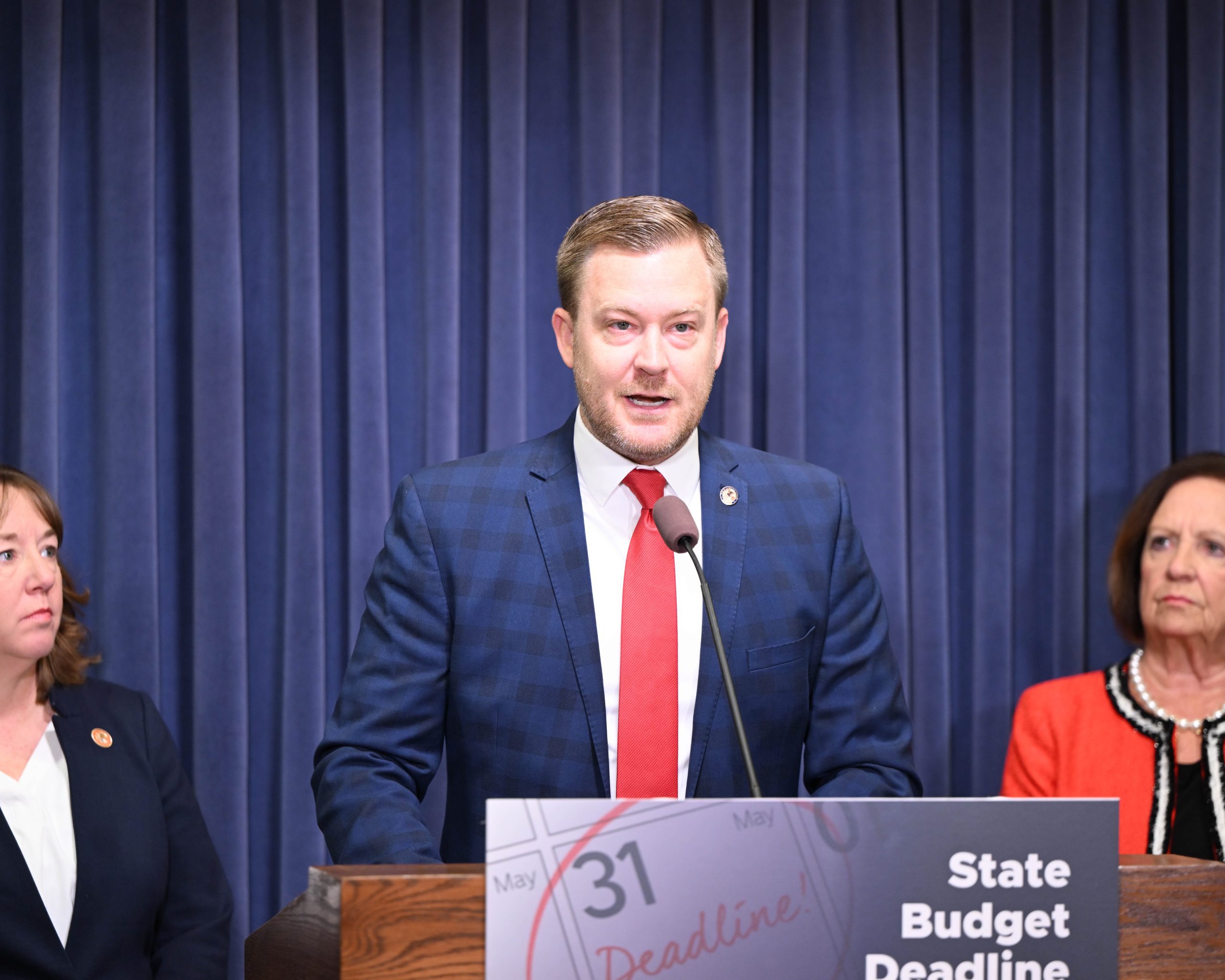
Illinois lawmakers are still batting around a variety of budget ideas with just a few weeks left in the legislative session.
The state remains on track to take in more revenue than originally expected this year, which provides wiggle room —though not much — for lawmakers in the budgeting process. But there remains contention about what the budget should look like, not just between the parties but also between factions of Democrats, with some demanding hefty tax increases beyond what the governor has proposed.
The Illinois Revenue Alliance, a group of progressive lawmakers and organizations such as the Chicago Teachers Union, wants to raise nearly $4 billion to increase funding for social services. They’d do that by creating new taxes and eliminating tax credits, but the governor hasn’t embraced any of the proposals, which are viewed as longshots. […]
Revenue in April was up $146 million, or 2%, compared to April 2025, with income tax receipts this March and April increasing by 4.1% compared to the same period last year, according to the bipartisan Commission on Government Forecasting and Accountability. The numbers fall in line with COGFA’s revised revenue estimates for the year, meaning there is no “April surprise” that would throw a wrench into final budget talks and projections remain on track.
Overall in FY26, revenue is up $1.7 billion through April, or 3.8%, compared to the same point in FY26. Strong-performing income tax receipts are helping to drive the revenue growth, which COGFA notes is exceeding the 0.9% growth originally expected this fiscal year. Sales taxes, which can serve as an indicator of consumer confidence, are also up 4% compared to last year. […]
Rep. C.D. Davidsmeyer, R-Murrayville, a cochair of COGFA, attributed much of the revenue growth to new taxes that have been part of recent budgets.
“It just shows that, you know, despite the tax increases that we’ve seen over the years, the tax increases are what’s keeping funding and revenue stable, as opposed to just natural growth in our economy,” he said.
Not every revenue source is in the black, however. Corporate income taxes have been declining throughout the year and are down $262 million, or 6.8%, in part because of federal tax code changes that have lowered tax rates on businesses. Parts of Illinois’ tax code are tied to the federal code. […]
Davidsmeyer said preparing for the economy to decline should be a priority during the budgeting process as unemployment ticked over 5% in February.
“You hope that the economy remains strong, but in the state of Illinois, we’re putting additional pressures on ourselves that the federal government is not putting on us,” Davidsmeyer said.
Read more from Capitol News Illinois.